Book in a Bag makes books more accessible to complex learners by connecting words and pictures to real objects they can see, touch, and experience—supporting literacy, language, and understanding stories.
You don’t need special equipment or elaborate materials to get started. With a few objects and creativity, you can create an engaging learning experience that is accessible to your child’s abilities!
CONNECT WORDS TO OBJECTS
Some children aren’t quite ready to learn from pictures in a book. Pairing the story with real objects gives them something they can see and touch while hearing the words. This helps connect the word with what it represents.
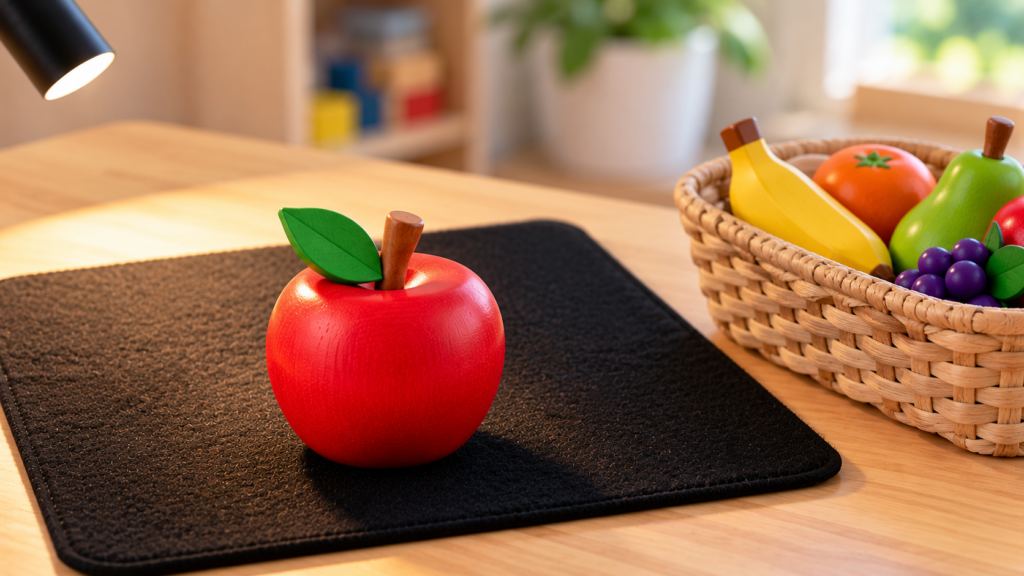
For children with sensory or vision challenges, real objects can also provide a more engaging way to experience a story. Try objects with high-contrast colors, or textures your child especially likes.
MAKE A SIMPLE BACKGROUND
A flat, black background can help a child focus on the object instead of everything around it. A large, three-panel felt board works well, but it isn’t always practical for families.
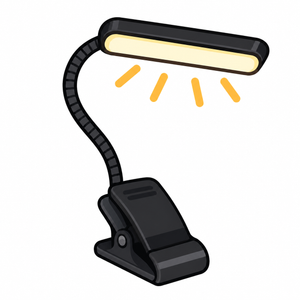
Instead, try covering an inexpensive handheld whiteboard with black felt and clipping a small book light to it. This gives you a lightweight, black surface you can use almost anywhere—including while a child is lying down or when you’re on the go.
Good positioning can make a big difference, too. For children with significant motor challenges, sitting upright and controlling their head and trunk can take a tremendous amount of effort. If a child can comfortably lie down while exploring the book, they will be able to put more energy into looking, touching, and learning.
SAFETY FIRST
Some children explore objects by putting them in their mouths. Before adding anything to a Book in a Bag, consider your child’s individual abilities and swallowing safety. Small objects, detachable pieces, magnets, batteries, strings, and anything that can break apart may create choking, aspiration, swallowing, or other safety hazards.
Choose sturdy materials appropriate for your child, inspect them regularly for damage, and provide close adult supervision during use. If your child has swallowing or oral-motor concerns, check with their medical or therapy team before introducing new objects.
YOU DON’T NEED A 3D OBJECT FOR EVERYTHING
You should absolutely get creative with what you have around the house, but don’t worry if you can’t find a real object for everything. Occasionally using clear, high-contrast pictures work, too! The goal is to give the child something meaningful to connect with—not to create a perfect set of props.
You can also make simple pieces yourself. Brown felt tied into a little knotted ball can become a “meatball.” Self-adhesive Velcro can make pieces removable, which is especially useful for stories where something changes from page to page, such as adding decorations to a gingerbread man.
START WITH A SIMPLE BOOK
You don’t need a complicated story. First Little Readers is a great starting point because the books have just a few pages and one simple sentence per page. I easily adapted eight of the stories into Book in a Bag activities!
Books don’t have to be complicated to become fun learning experiences. Find a favorite story, gather objects you already have, and see what happens!
Featured Products
Some links below are affiliate links. If you purchase through one, Carethriving may earn a small commission at no additional cost to you.
As an Amazon Associate I earn from qualifying purchases.